Creating A New Swan Lake
by James Sofranko
If you were to conduct a survey about what title comes to mind first when you think of classical ballet, I have no doubt that Swan Lake would top the list. Perhaps The Nutcracker would come close, but Swan Lake has endured in the hearts and minds of generations as a symbol of classical beauty and high art. From the ethereal imagery of the swan corps in white, to the dual role Odette/Odile (the White and Black Swan) danced by the same ballerina, all accompanied by Tchaikovsky’s most dramatic score, Swan Lake has been cemented as one of the pillars of our art form. From my arrival on the job as artistic director seven years ago, I knew that I wanted to present a full-length traditional version of Swan Lake at DeVos Performance Hall with the Grand Rapids Symphony, and I am thrilled that that day has finally arrived.
Marius Petipa and Lev Ivanov are the choreographers of the ballet who premiered their version of Swan Lake from which our production is derived, at a celebration of Tchaikovsky in 1895, following his passing in 1893. Their work has since been seen thousands of times, passed down to new generations of dancers, and in that process, edited, changed, and varied. We do not know exactly what happened on that stage in St Petersburg Russia in 1895 but we must assume that some of the most iconic scenes had their germ in that moment. So while I am staging a “new” version of Swan Lake, I am not reinventing. There is always room for choreographers to create wildly different versions of the ballet, and that has certainly been done, which is part of the beauty of the evolution of our craft. But in this version I pay homage to what is generally accepted in our time as “traditional.” Certain sections of the ballet I am not adjusting too much at all, some sections I am creating from scratch, and others lie somewhere in the middle. I look at my role as that of a tailor, adjusting the ballet to fit the company I have in front of me, while also making my own personal mark.
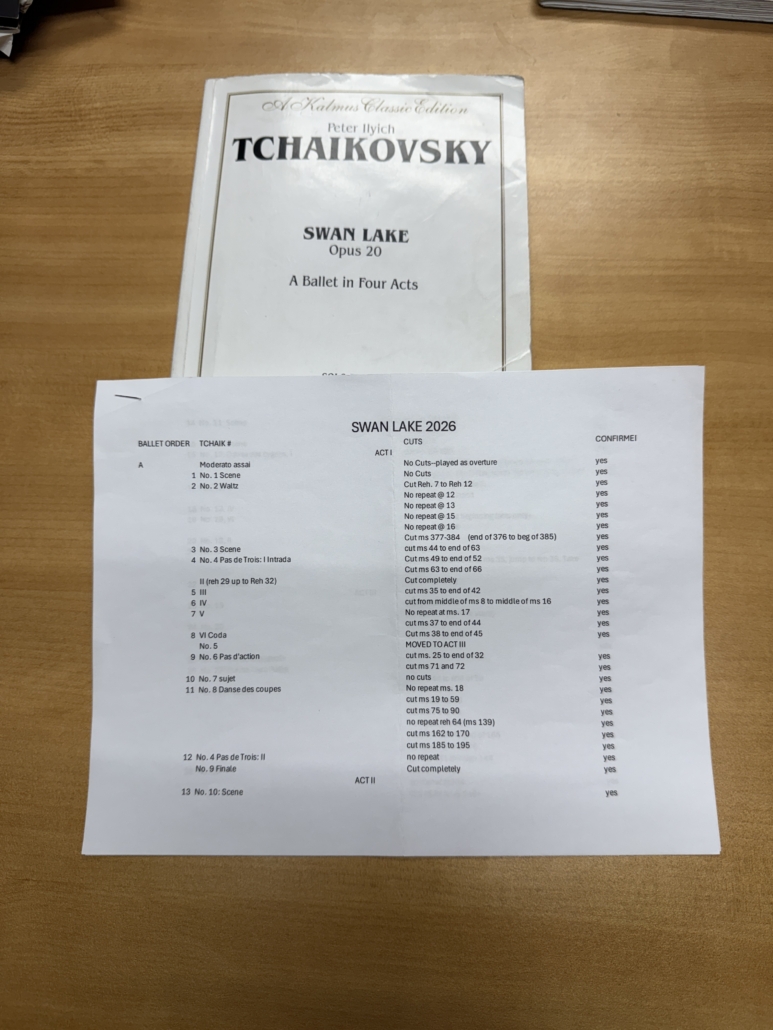
Even though the framework is laid out before me, it doesn’t mean that this process isn’t daunting! I want to create something that is worthy of the history of the ballet and I also want to show our dancers off in the best way possible, not to mention provide an enjoyable evening for our audience! As usual, my first step begins with the music. John Varineau, long time GRB conductor and associate conductor of the Grand Rapids Symphony, and I started meeting in the summer to discuss the cuts to the score. I am so thankful to him for his knowledge, time and dedication to the collaboration between our two organizations.
Similar to how the choreography has evolved through decades, portions of the score are now re-arranged, edited, and even inserted into different acts. I purchased a piano reduction of the score and was amazed to learn what Tchaikovsky originally intended compared to what we hear now! Also, there is so much more music than what our audiences today typically will sit through, so John and I had to decide what to cut and what to keep.
I would suggest a cut, and John would let me know it would sound ok, or if jumping from one part to another might sound problematic to the ear. It was a slow process, but eventually we settled on a “cut list” and delivered it to the orchestra librarian so they could begin the painstaking process of adapting each player’s individual score.
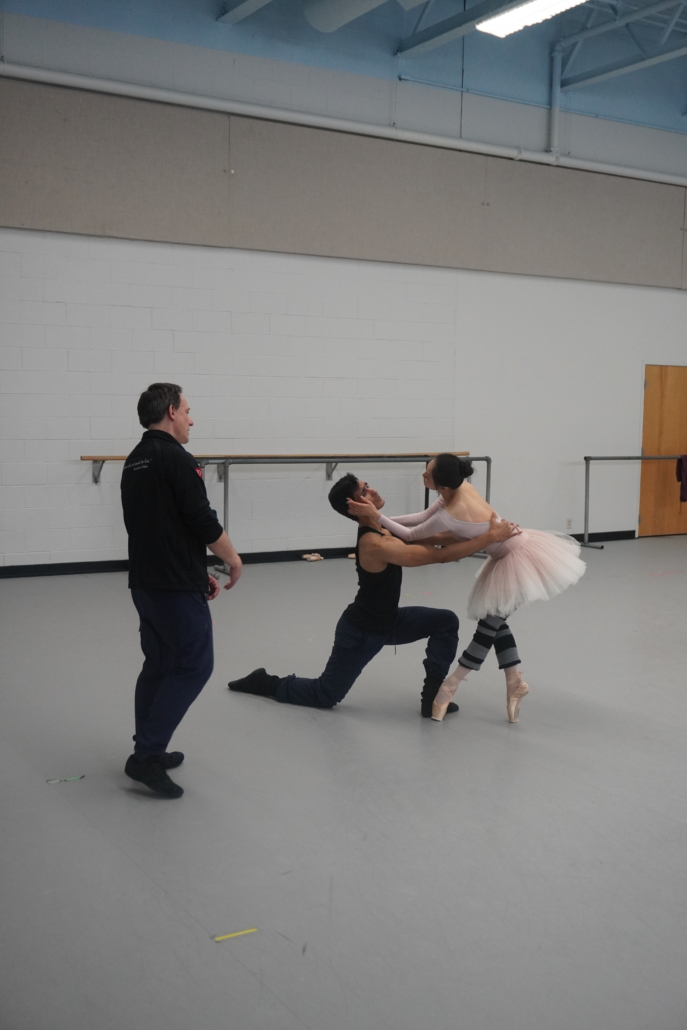
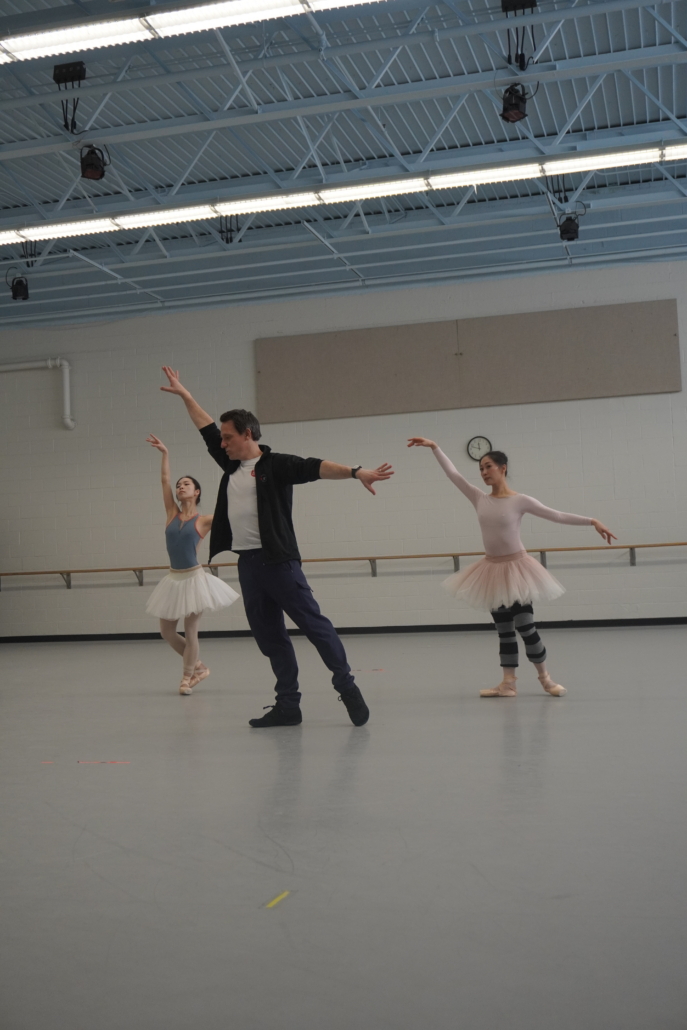
In August, the dancers returned from their summer break and with edited tracks to match our cut list, I began to rehearse. I started “easy” with the White Swan pas de deux and the four cygnets from Act 2, both iconic and neither of them needing much change from what is usually done. But eventually I started working on some dances from Act 1 and 3, which I created almost completely brand new. I say “almost” because it’s inevitable that ideas about certain sections of the score have a subconscious way of working their way into your brain, and eventually your steps, so that one day you notice what you created and say “Huh, that looks similar to what I remember years ago in such and such production.” In this way the ballet continues to evolve.
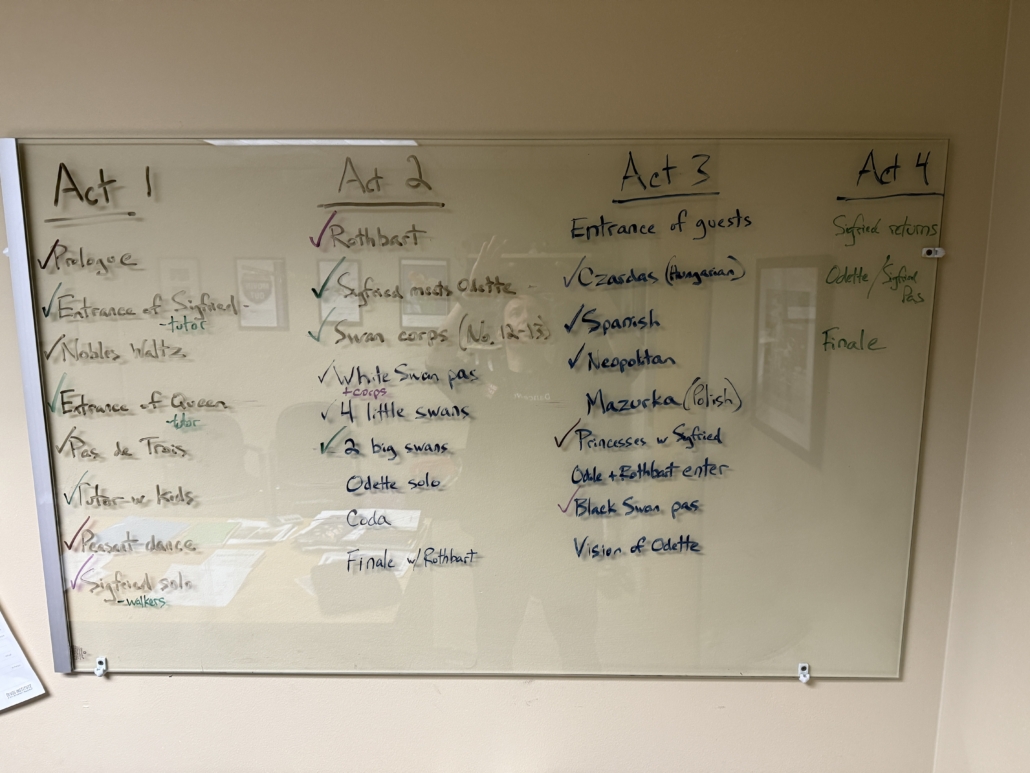
I have a list of all the Swan Lake scenes on the dry erase board in my office, and throughout the fall and winter I have slowly been chipping away at them, amidst rehearsals and performances for Sherlock and Nutcracker. Currently, most of what remains for me to choreograph is Act 4, the final lakeside scene. Act 4 is probably the most varied of the Acts in all the versions I’ve seen and researched, both musically and choreographically.
Another element in the process is the sets and costumes we are renting from Pittsburgh Ballet Theater. While the costumes have already arrived in Grand Rapids, we will not see the sets until the week of the show. So knowing exactly how to choreograph with them is a matter of doing research on video, measuring, and taping on the studio floor.
I am very grateful to our artistic staff, Dawnell Dryja-rehearsal director and artistic coordinator, and Cynthia Sofranko-assistant rehearsal director and my choreographic assistant for Swan Lake, for assisting me during this process, helping me stay on task and organized, and being a sounding board for ideas. And just because I may be done choreographing a certain section, it doesn’t mean that it is ready to be performed! The dancers need time to really get to know the steps with the music, which only comes with
repetition. I do my best not to tweak or change steps after a certain period, but sometimes I must, and the dancers have to be good sports about it!
Which brings me finally to the dancers themselves. They are obviously integral to this process, and while I may try to choreograph while lying in bed at night, a ballet can only really take shape once we’re together in the studio. Dance is a social art form, you can’t do it alone! I am very grateful for all of their support, and proud of our company for rising to the occasion of Swan Lake. Swan Lake is “no joke” and is a feat both mentally and physically, from the principals to the corps. I am excited to have a special guest dancer performing with us, Misa Kuranaga, principal dancer with San Francisco Ballet. Misa and I danced together briefly at SFB, and then she went on to Boston Ballet where she has enjoyed international success. She is one of the world’s leading ballerinas, and we are very lucky that she will be performing with us.
I hope you can join us to see this world premiere Swan Lake, tailor-made for Grand Rapids Ballet, but with an homage to the original creators. This is how ballet was designed to be experienced, with large scale sets and costumes, live orchestra, and fantastic dancing. I look forward to seeing you there!